Severn Trent and family of late historian honours Dambusters legacy with replica ‘bouncing bomb’ handover to 617 Squadron
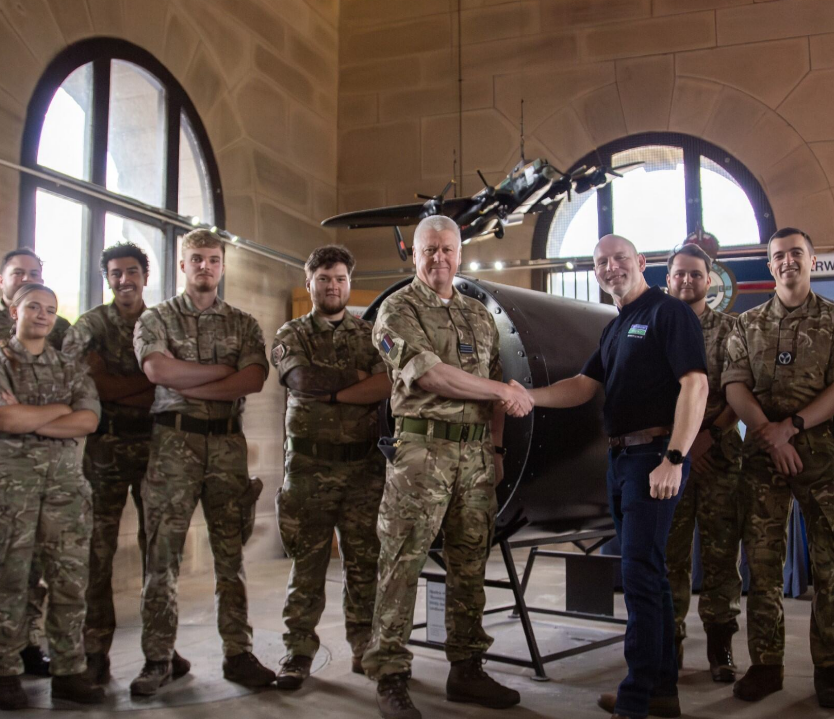
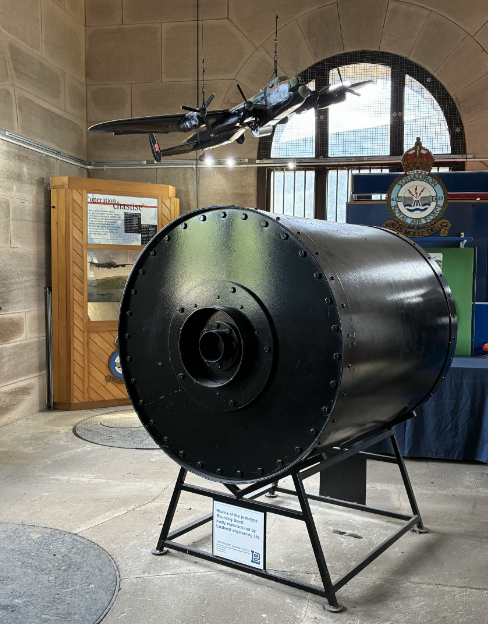
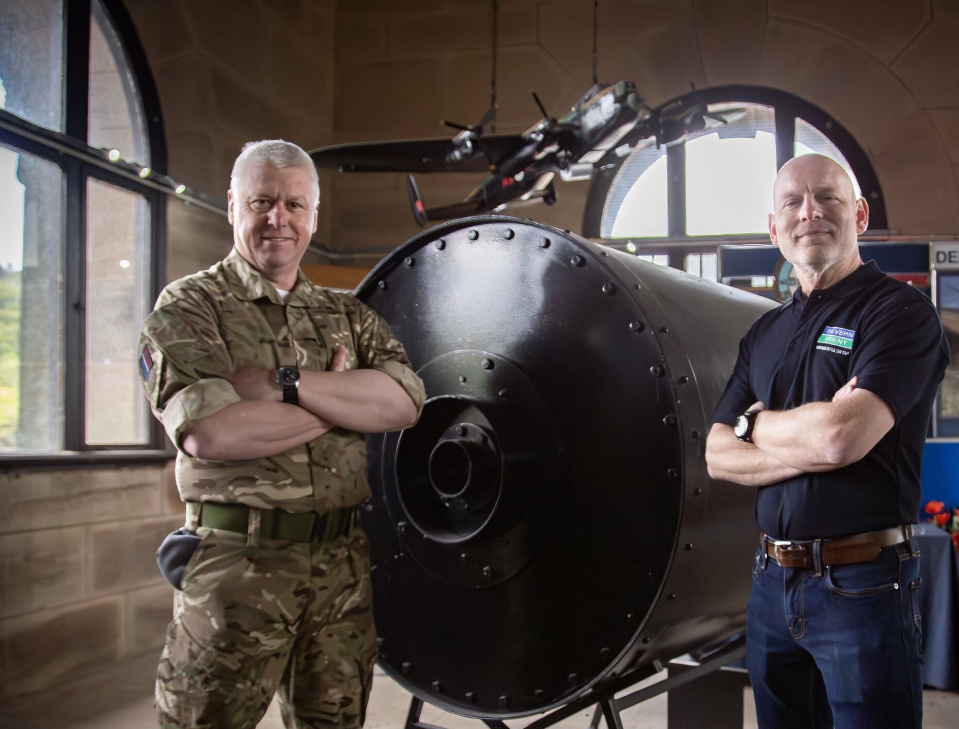
Severn Trent and the family of a late historian have honoured the RAF Dambusters and their links to Derwent Dam by donating a replica ‘bouncing bomb’ to the famous 617 Squadron.
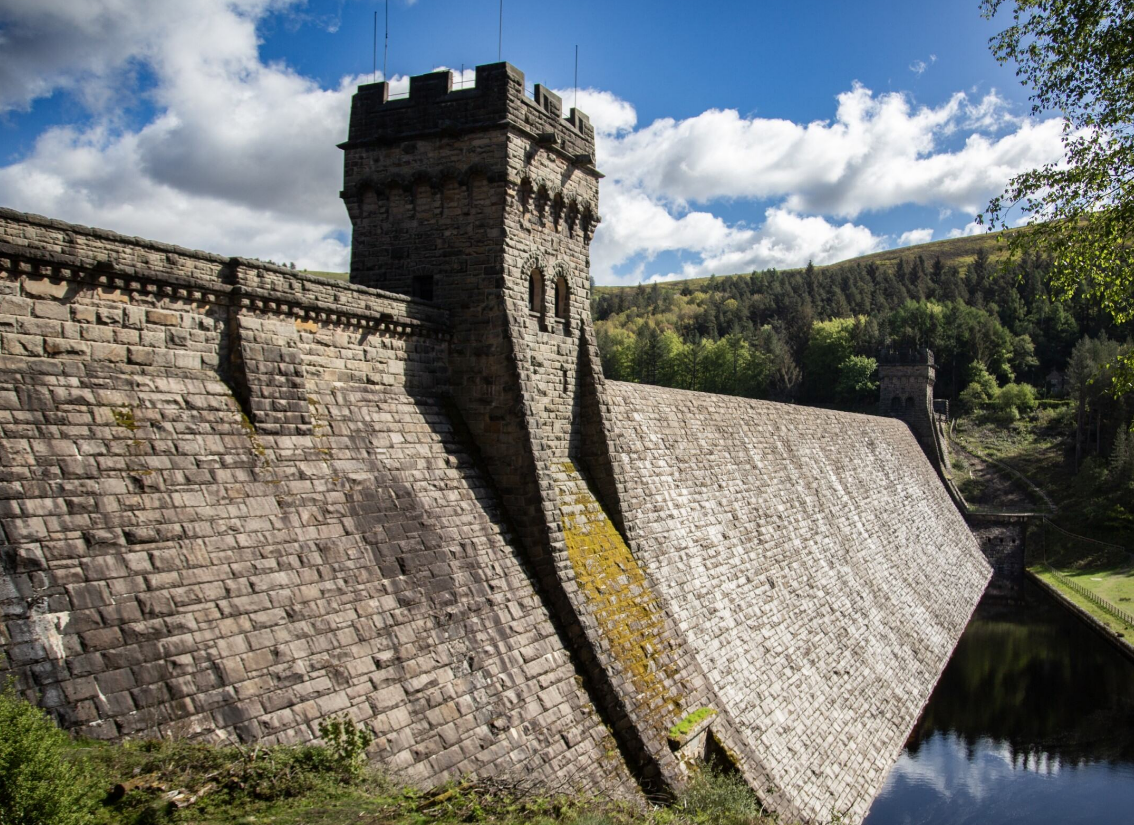
Modern-day members of the Squadron travelled to the Peak District site to attend a special handover ceremony at the reservoir, which supplies quality water to people across Derbyshire, Leicestershire, and Nottinghamshire.
The life-sized replica had been part of a former Dambuster museum housed at the Dam, but will now go on display again at the official 617 Squadron’s HQ at RAF Marham, Norfolk.
The Derwent Dam Museum was founded by the late local historian Vic Hallam in the 1980s and has been closed for around ten years. Now after discussions between his family, Severn Trent and the RAF, the new home has been found for the replica at RAF Marham.
The original ‘bouncing bomb’ was invented by Derbyshire-born engineer Sir Barnes Wallis, and was codenamed ‘UPKEEP’ before the top-secret raids on dams in Germany on May 16 and 17 in 1943.
Flight Lieutenant Ady, MBE, from 617 Squadron attended the special handover and said: “On behalf of 617 Squadron, I’m delighted to accept the handover of the replica UPKEEP mine.
“Its presence will be a constant reminder to all who work or visit the squadron of the significant history of the Dams raids - of the men who conducted the raid in 1943 and the innovation that the raid signified.”
The Dambusters were led by Wing Commander Guy Gibson and practiced low-flying raids in Lancaster Bombers across the waters of Derwent in early 1943, ahead of the successful mission targeting dams in Germany.
A total of eight planes were damaged or shot down during Operation Chastise on May 16 and 17, with the loss of 53 lives – but the mission was a success with two dams breached. Wing Commander Gibson was awarded the Victoria Cross for his leadership of the legendary Dambusters and personal bravery.
The replica bomb will be moved to RAF Marham this summer, where it will go on permanent display to those on base and visitors, including dignitaries.
Members of Severn Trent’s Armed Forces Network also attended the handover ceremony at Derwent Dam, including George Cook.
George, a Bombardier in the 1st Royal Horse Artillery, said: “We're hugely proud of our links with the Dambusters at Severn Trent and this donation is a wonderful way to honour that legacy.
“It was a privilege to meet 617 Squadron members to talk about the Dambusters and discuss the valuable work of our group, which helps former service personnel to find fulfilling new careers in the water industry.”
The Derwent Dam Museum was founded by passionate historian Vic in the 1980s. His family has worked closely with Severn Trent and the RAF to generously support the donation.
The news comes as Derwent Dam marks its 110th anniversary, a milestone celebrated by the release of recent archive images showing original Dam-builders from all those years ago.
The story of Derwent highlights the central role reservoirs play in the 12hr rain-to-tap journey of our water, involving thousands of Severn Trent people. It stores large amounts of water, which all comes from the Peak District, and actively improves water quality by giving the reservoir time to benefit from natural purification, including sedimentation.
The rain to tap journey then continues with water flowing to one of Severn Trent’s Derbyshire treatment works for further treatment to the highest standard. It is then piped to homes where people can enjoy some of the best water in the world – 12 hours of quality and care behind every turn of the tap.